Proxy examines how images, objects, and systems come to stand in for events, conditions, and experiences that are unstable, inaccessible, or in flux. Generated through traces, measurements, datasets, classifications, and other forms of indirect evidence, these works question the authority traditionally granted to representation.
Rather than presenting the thing itself, the projects operate through substitution, asking what kinds of knowledge can be produced when evidence is mediated, incomplete, or constructed through technical systems.
Untitled #310, 2020 - ongoing
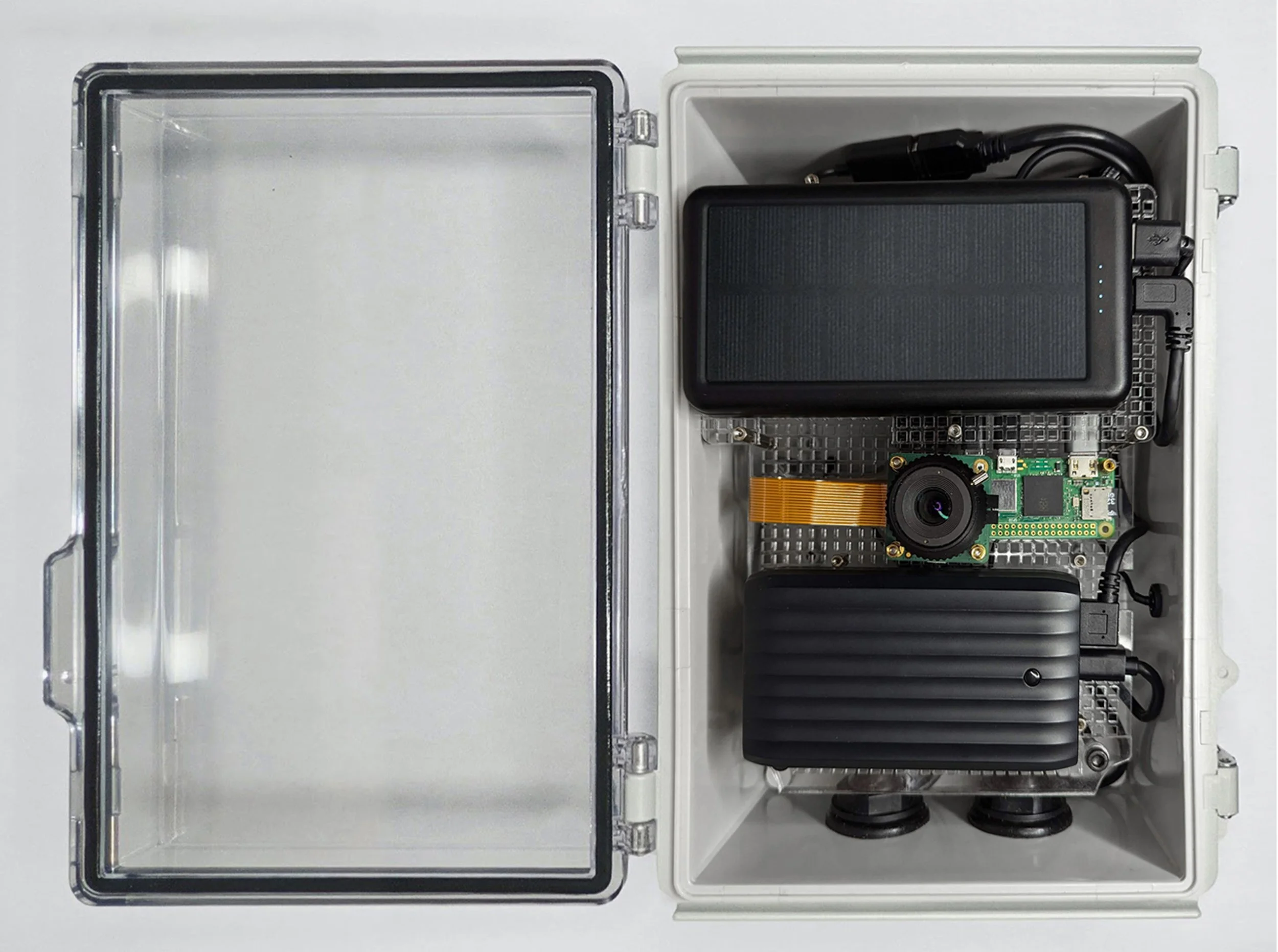
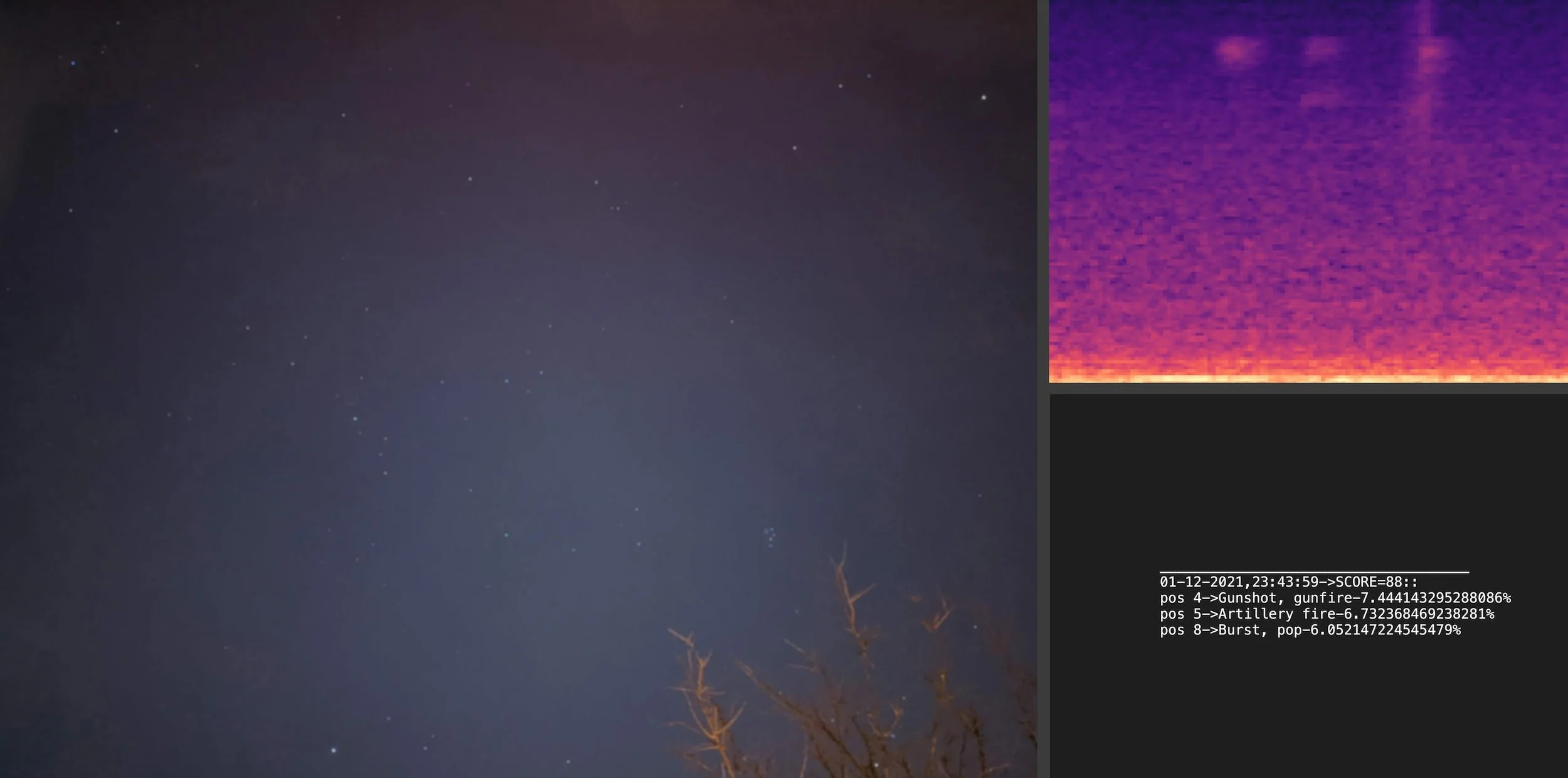
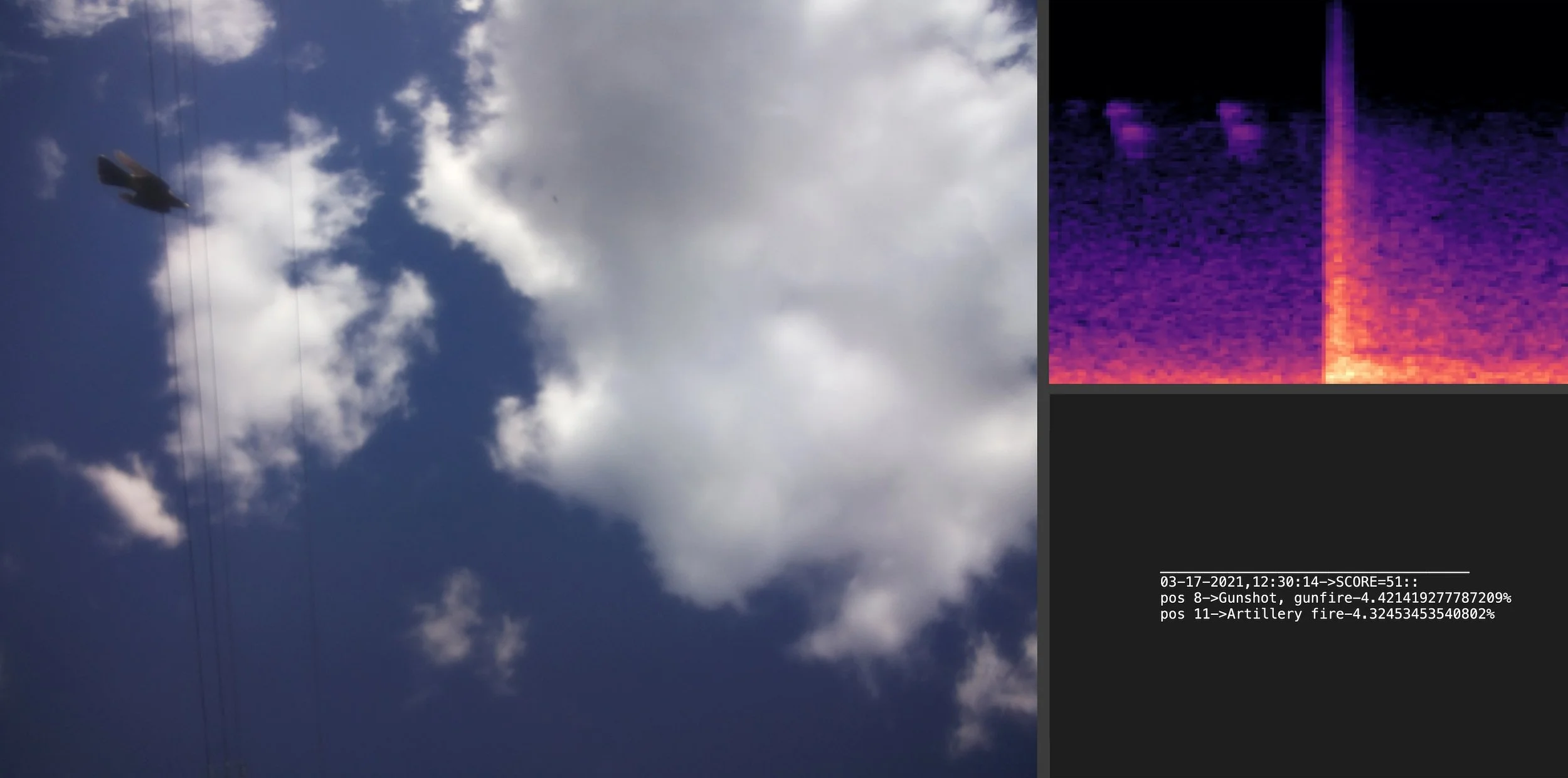
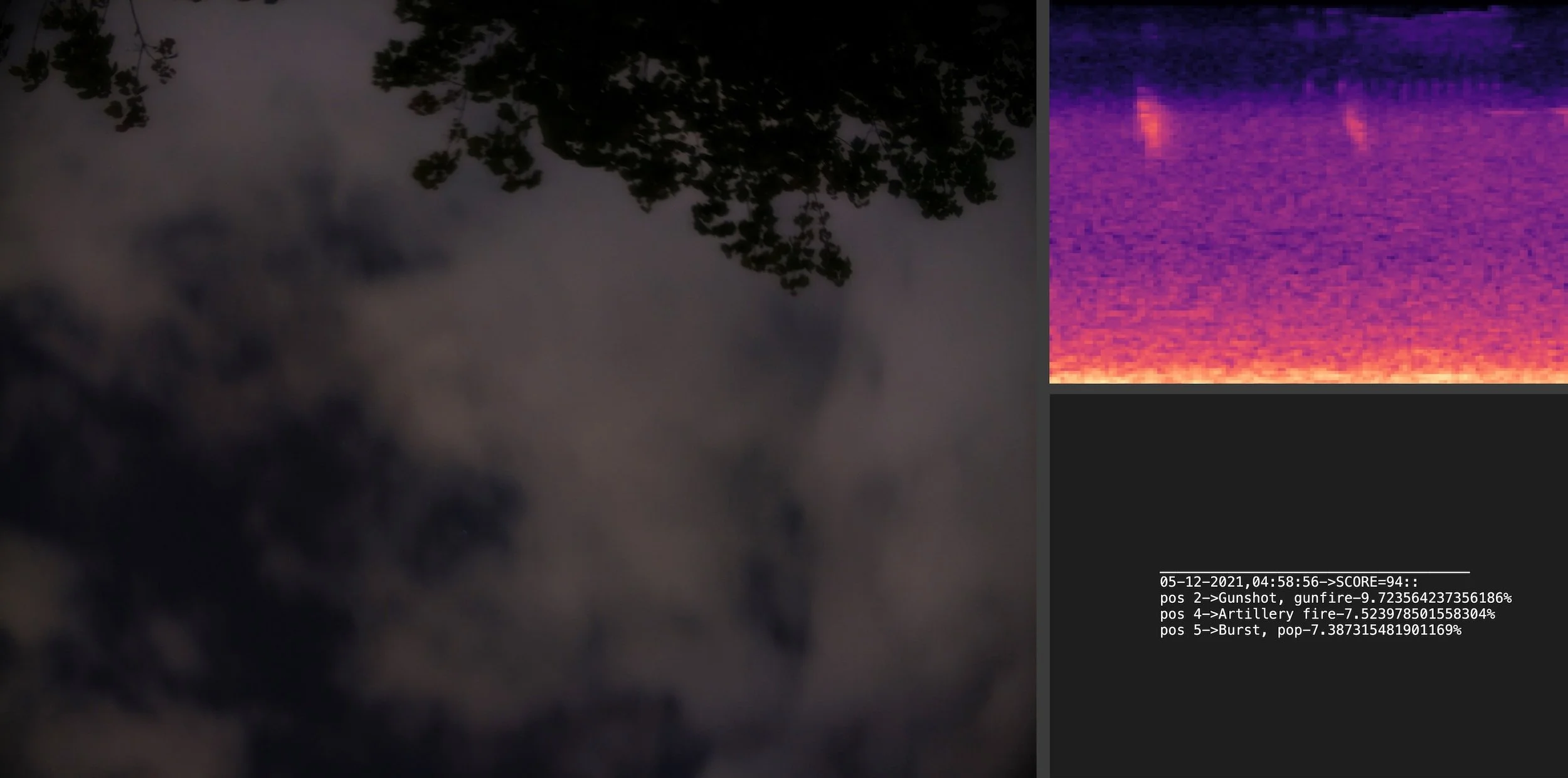
Using an artificial intelligence neural network trained on the Google AudioSet, this work detects the sound of a gunshot and instantly takes a photograph of the sky at that moment. Although the photographs will largely not capture any event, their index is a response to the instantaneousness of gun violence which has characterized the past four decades.
Raspberry Pi, Camera, Solar cell, Battery, Microphones, Watertight encasement
Representative outputs from Untitled #310.
Each image combines an upward-facing photograph, a spectrogram of the triggering audio event, and machine-generated classification data.
Together these elements form an indirect record of an event that remains absent from the image itself.
Synthetic Histories, 2025 - ongoing
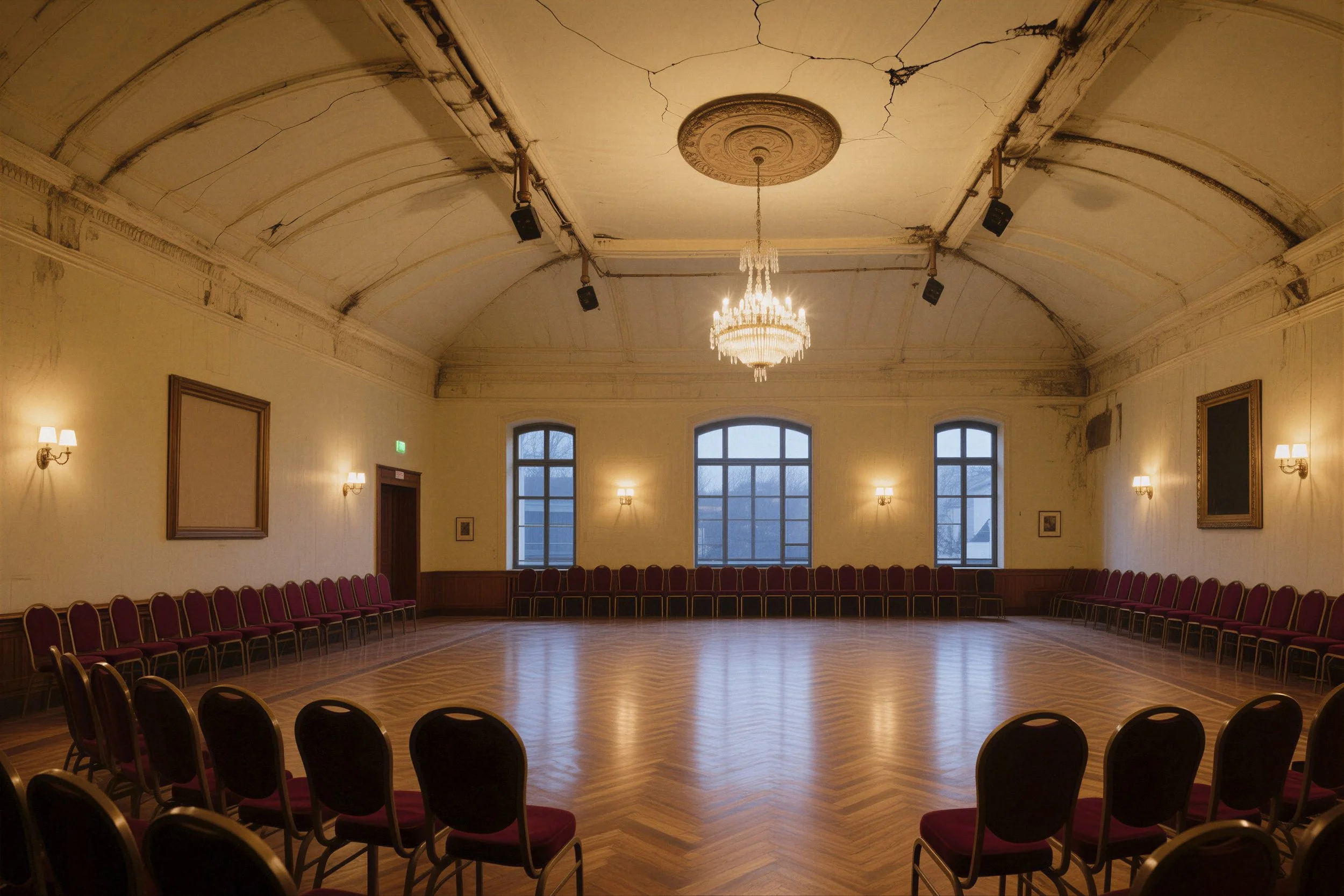
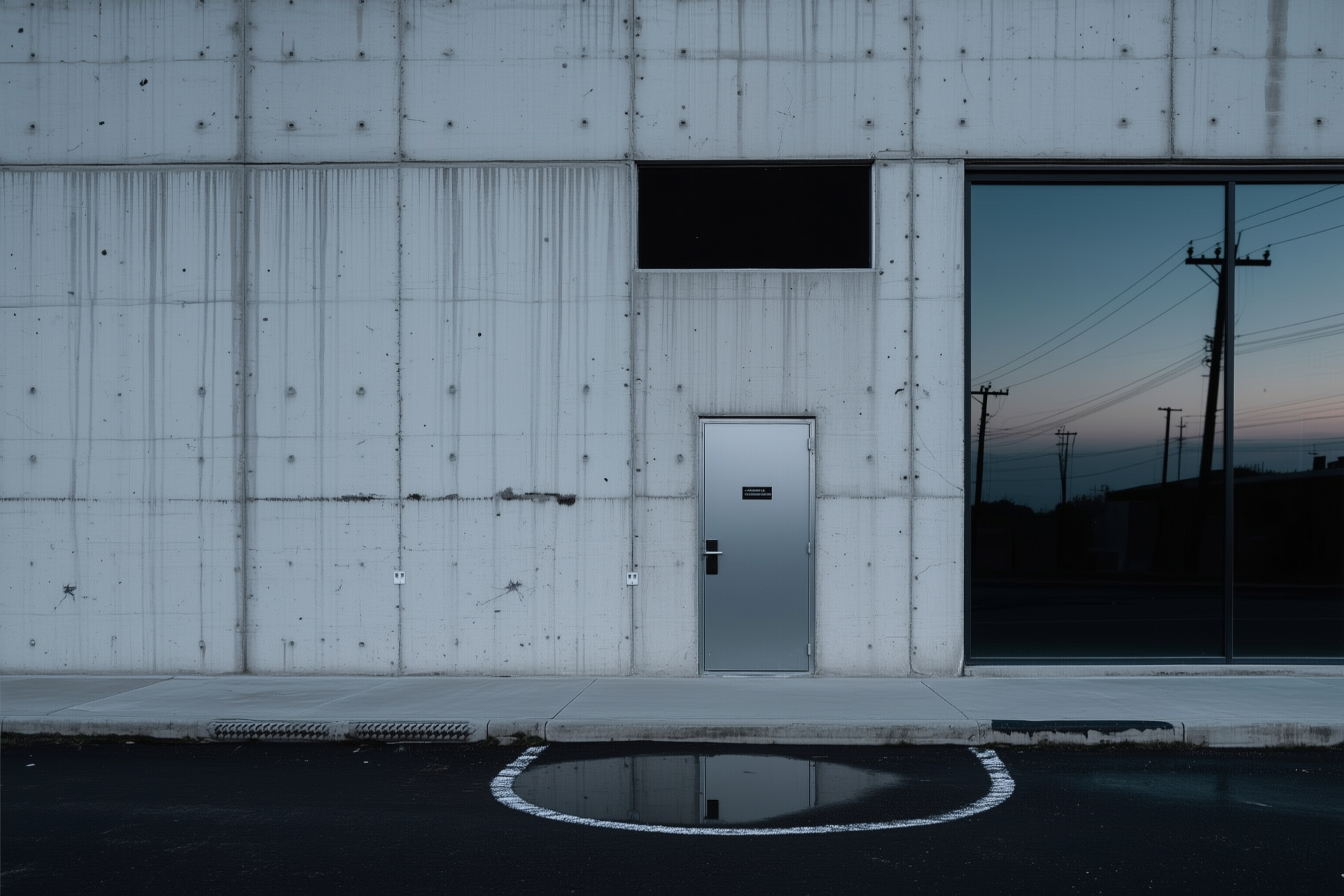
Synthetic Histories employs a custom visual encoding system to transform historical events into indirect visual representations. Developed through an eighty-page framework of compositional, material, spatial, and atmospheric relationships, the system translates characteristics of an event into image instructions without depicting the event itself. Artificial intelligence is then used to generate images from these encoded parameters.
The resulting works operate as proxies rather than documents. Shaped by the historical event yet visually disconnected from it, they examine how memory, meaning, and historical understanding are constructed through systems of representation rather than direct observation.
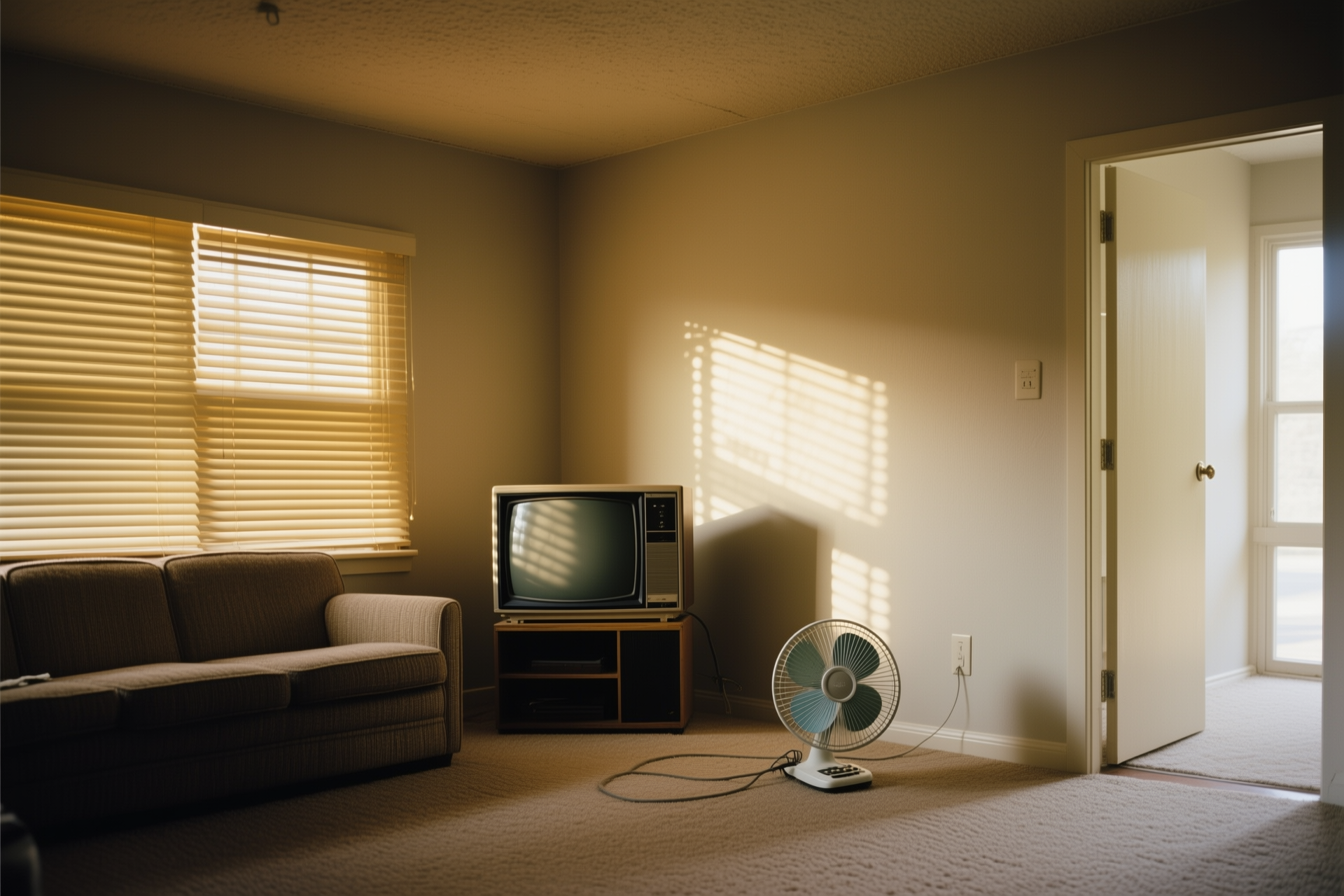
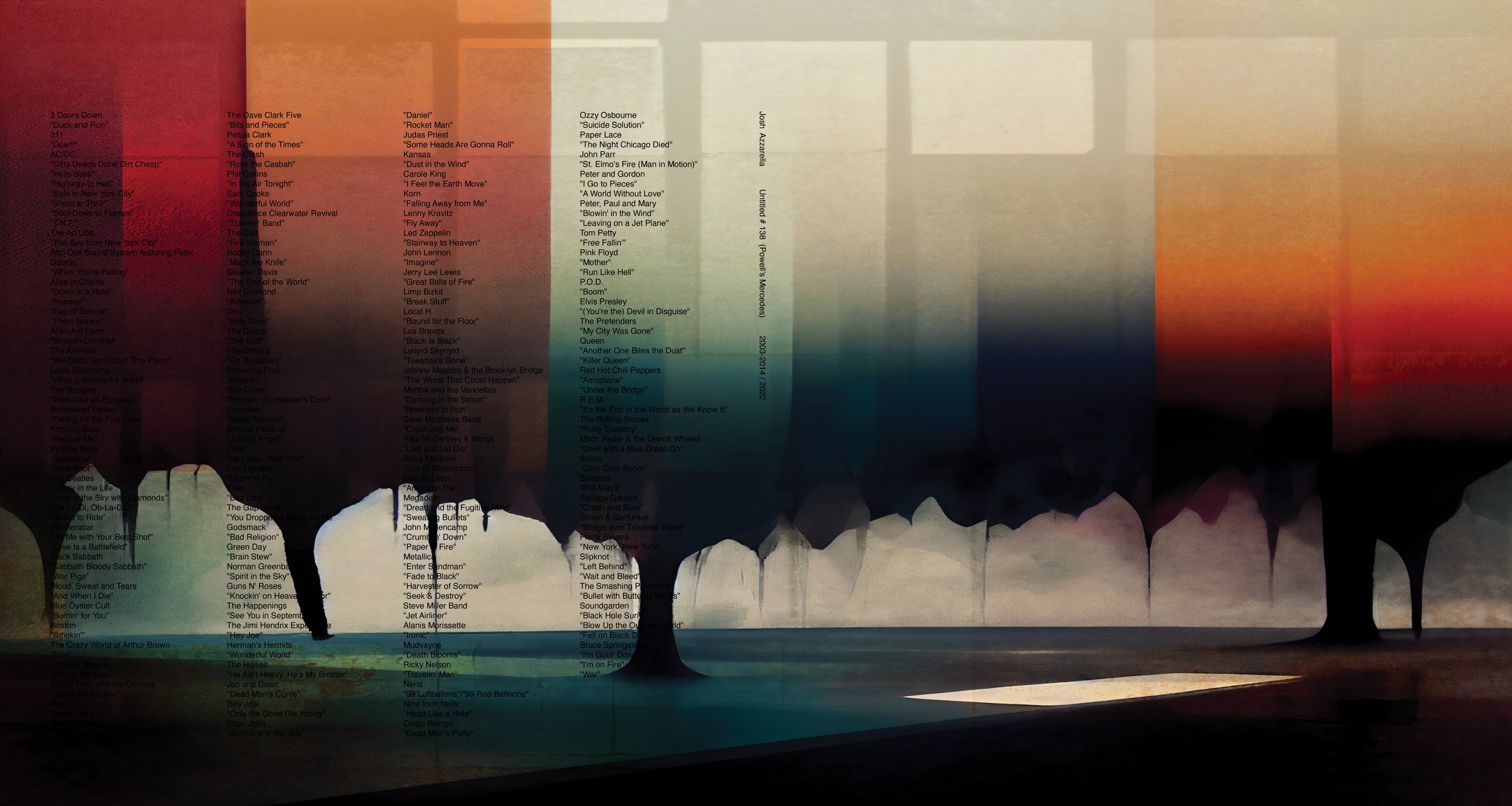
Untitled #138 (Powell's Mercedes) [2003–2014 / 2022]
This work investigates an alleged act of mass corporate censorship in the aftermath of national trauma.
The work consists of a custom lathe-cut record that functions as an alternative archive of the 218 songs identified in an internal Clear Channel memorandum of "lyrically questionable" tracks. Although the memorandum's existence was officially denied, the list circulated widely in the weeks following September 11, 2001. Computationally aligned at their midpoints and combined into a single composition, the songs collapse into a dense, jet engine-like roar, transforming individual recordings into a collective sonic monument to suppression and absence.
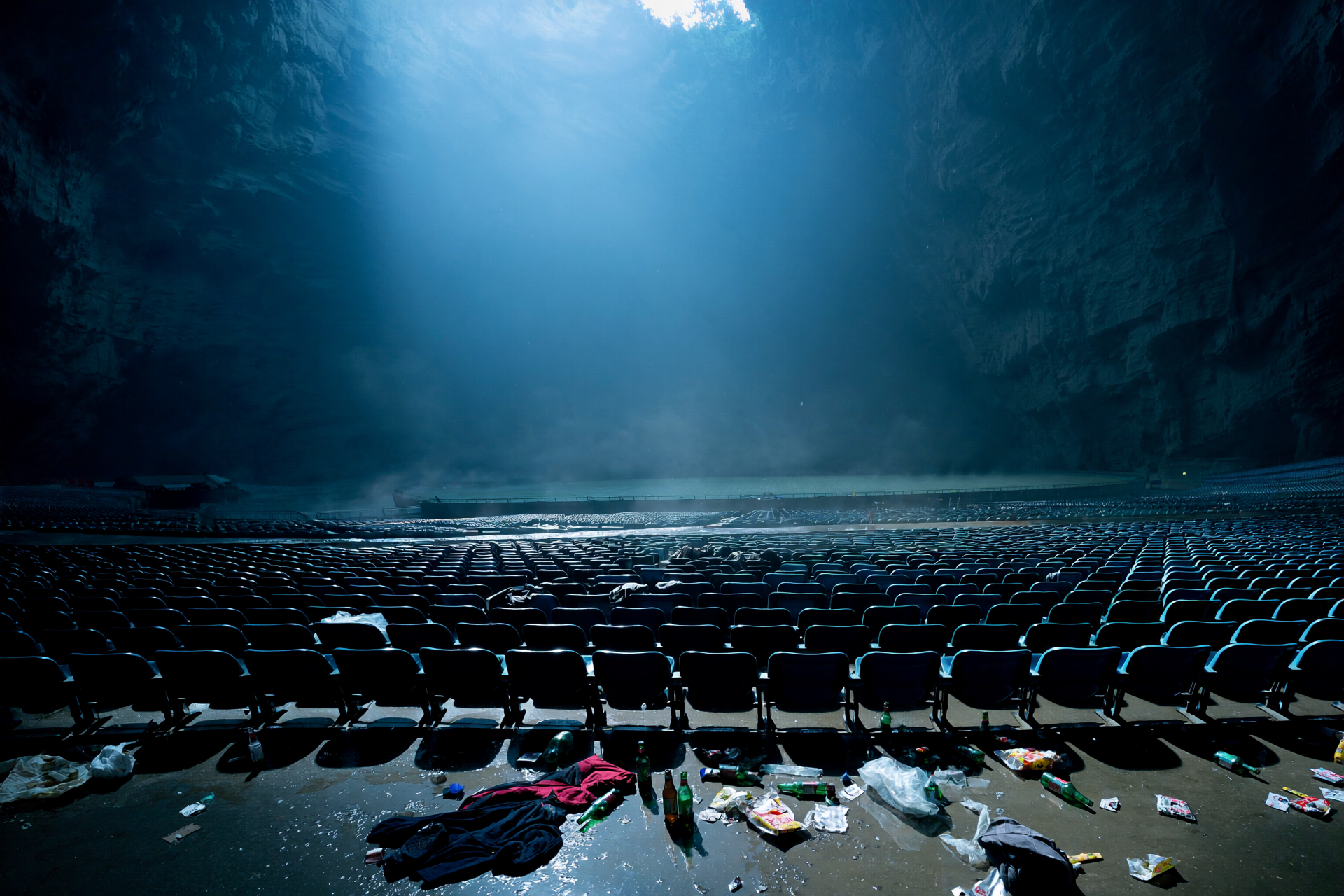
The AI-generated sleeve image was created using the titles of all 218 songs as source material, while the title deliberately blurs distinctions between corporate and governmental authority. Together, these elements position memory not as a stable historical record, but as a construct shaped by institutions, technologies, and systems of representation.
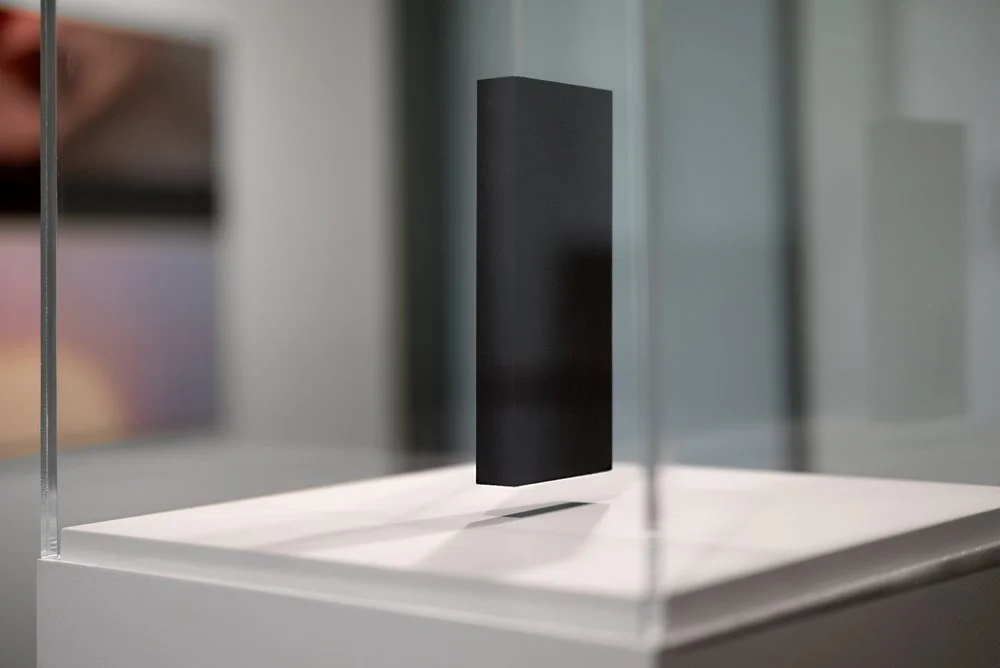
Untitled #176 (Albedo 0.343), 2015-2018
Installation view
Object: Neodymium, Polyamide, Steel. Dimensions: 5.76 × 2.25 × 0.64 inches
Base: Acrylic, Copper, Custom Circuit Board, Steel, Wood. Dimensions: Variable dimensions
A levitating object is held between support and separation, suspended above the surface beneath it. The space between them is stable yet unresolved: an interstice produced through precarious force, distance, and restraint.
Neither fully occupied nor entirely empty, the gap remains visually slight but structurally central. The object hovers at the edge of contact, making the threshold between attachment and release difficult to locate.
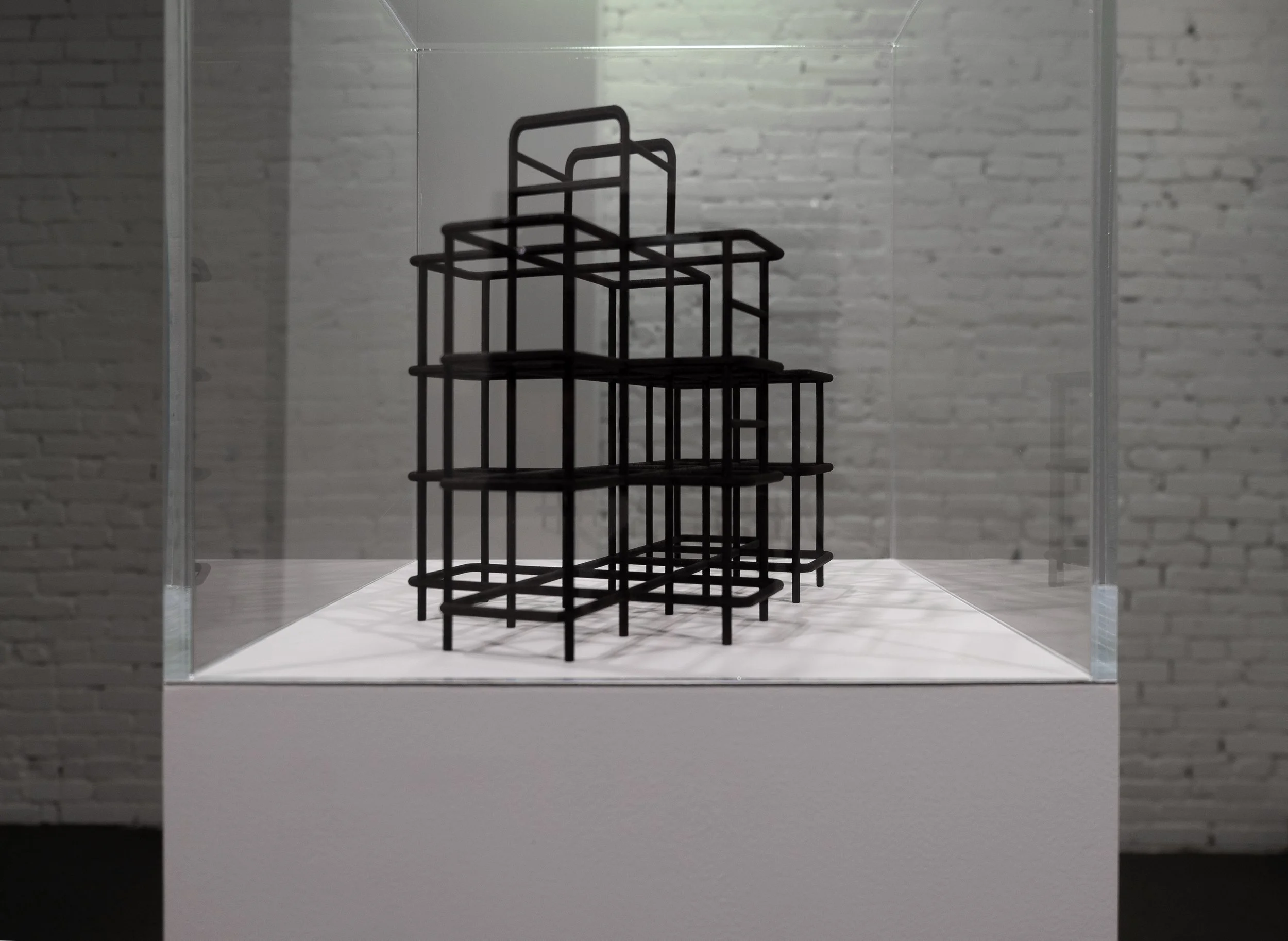
Untitled #299 (Whiskey and Wheat), 2019
Installation View
3D printed and laser sintered Polyamide, 8.25 x 6.75 x 5 inches
Derived from recurring appearances of a jungle gym throughout Alfred Hitchcock's The Birds, this sculpture is constructed from multiple, conflicting representations of the same object. As the structure shifts configuration from shot to shot, no singular version emerges as authoritative. The work instead combines these variations into a single amalgamated form.
The resulting object is both recognizable and unverifiable. Drawn from the accumulated evidence of the film yet absent from any individual frame, it occupies an uncertain position between observation, memory, and reconstruction.